Direct answer
In hot, dry and dusty climates, size the circulation system for higher evaporation and debris load, protect motors and electronics from heat and grit, choose sanitization that stays stable in strong sun, and treat an automatic cover as part of the equipment package because it cuts the load on every other component.
Key takeaways
- Evaporation and dust raise both water loss and filter loading; covers and oversized filtration pay back faster here than in mild climates.
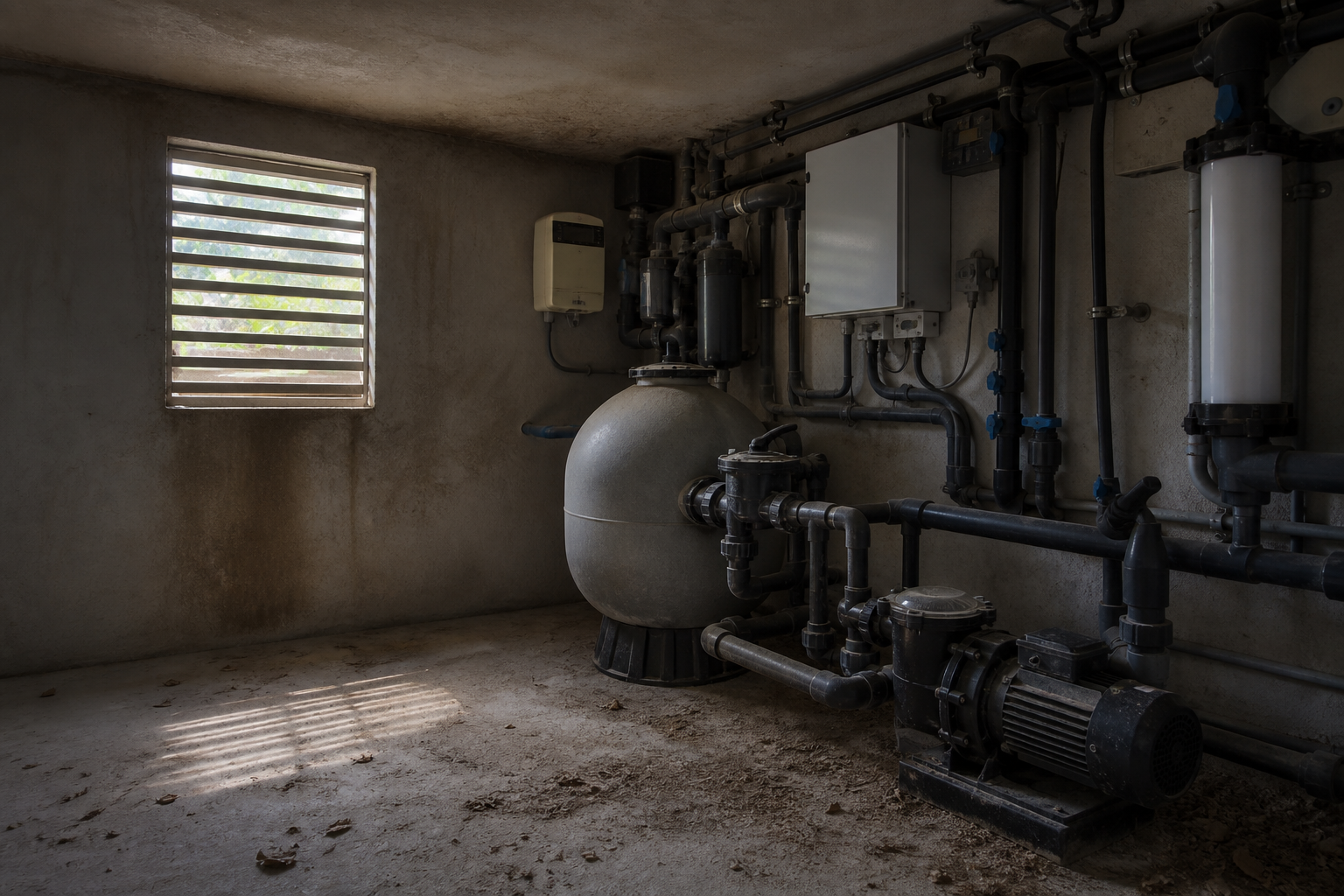
- Equipment rooms need shade, ventilation, drainage and sealed enclosures, not just floor area.
- Variable-speed pumps help because they can run longer, quieter filtration cycles without oversizing a single-speed motor.
- Specify UV-stable plastics, accessible filters and a realistic spare-parts list for sand, seals and sanitizer cells.
Hot, dry and dusty regions change the duty of every item in the equipment system. The water leaves faster, the air is harder on plastics and motors, and grit reaches the filter every windy afternoon. Specify for that environment, or the plant will spend its first season in recovery.
What the climate attacks
| Stress | Effect on the plant | Specification response |
|---|---|---|
| High evaporation | Heat and water loss, unstable chemistry | Cover the pool; size make-up and sanitizer for the uncovered hours |
| Dust and sand | Rapid filter loading, scored seals | Generous filter area, cleanable strainers, sealed enclosures |
| Ambient heat | Motor and electronics stress | Shade, ventilation, hydraulic cover drives on large systems |
| Strong sun | UV aging of lids, wiring and fabric | UV-stable materials and covered cable routes |
| Hard water / high TDS | Scale on heaters and salt cells | Accessible heat exchangers and a service plan |
The U.S. Department of Energy identifies evaporation as the largest pool energy loss and covering the pool as the most effective countermeasure. That is why covers in hot climates belong in the equipment conversation, not in a separate landscaping package.
Component notes
- Pump — prefer a variable-speed unit sized to the real design flow and head, then run long, slow filtration hours. Oversizing a single-speed pump adds heat in the room and noise on the deck.
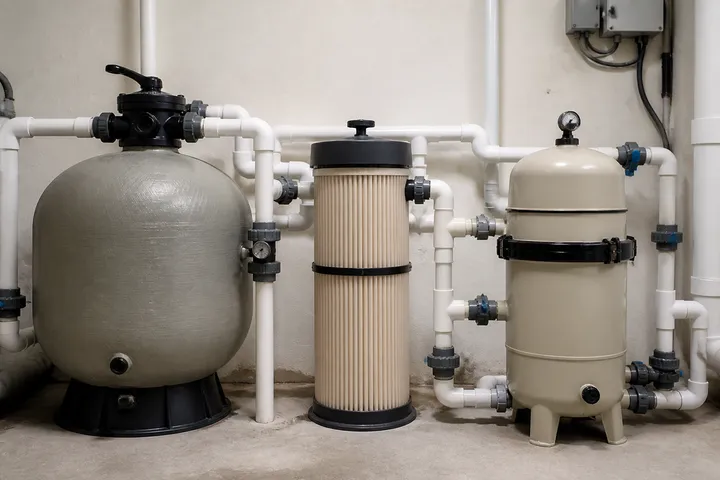
- Filter — dust makes area more important than brand. Compare types in pool filter types compared and keep a spare media or cartridge set on the project.
- Sanitization — sunlight destroys free chlorine faster; outdoor pools need either more robust residual control, a cover during unused hours, or a supplementary oxidizer strategy agreed with the designer.
- Heating and cooling — some hot-climate pools need heat only in the shoulder season and shade or night covering in peak summer. Do not size a heater as if the pool were in a cool maritime climate.
- Automation — put panels in a ventilated, dust-managed enclosure. Alarms matter more when chemistry swings faster.
Plant-room detailing
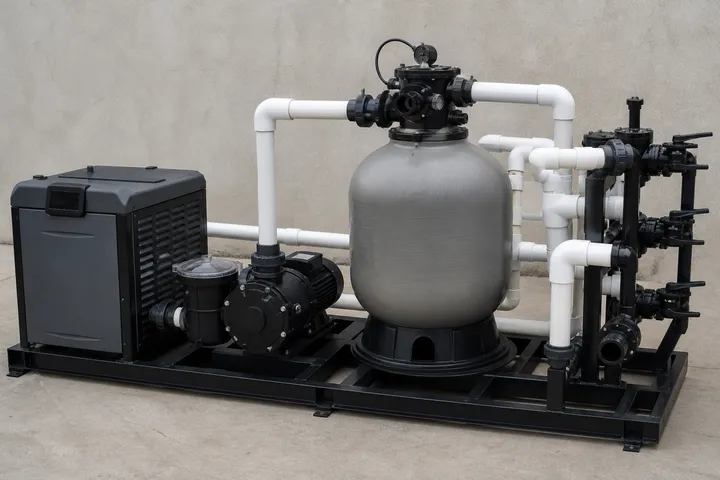
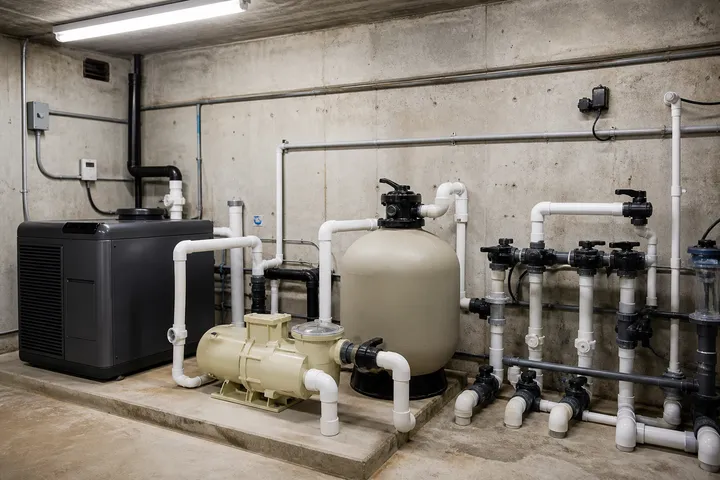
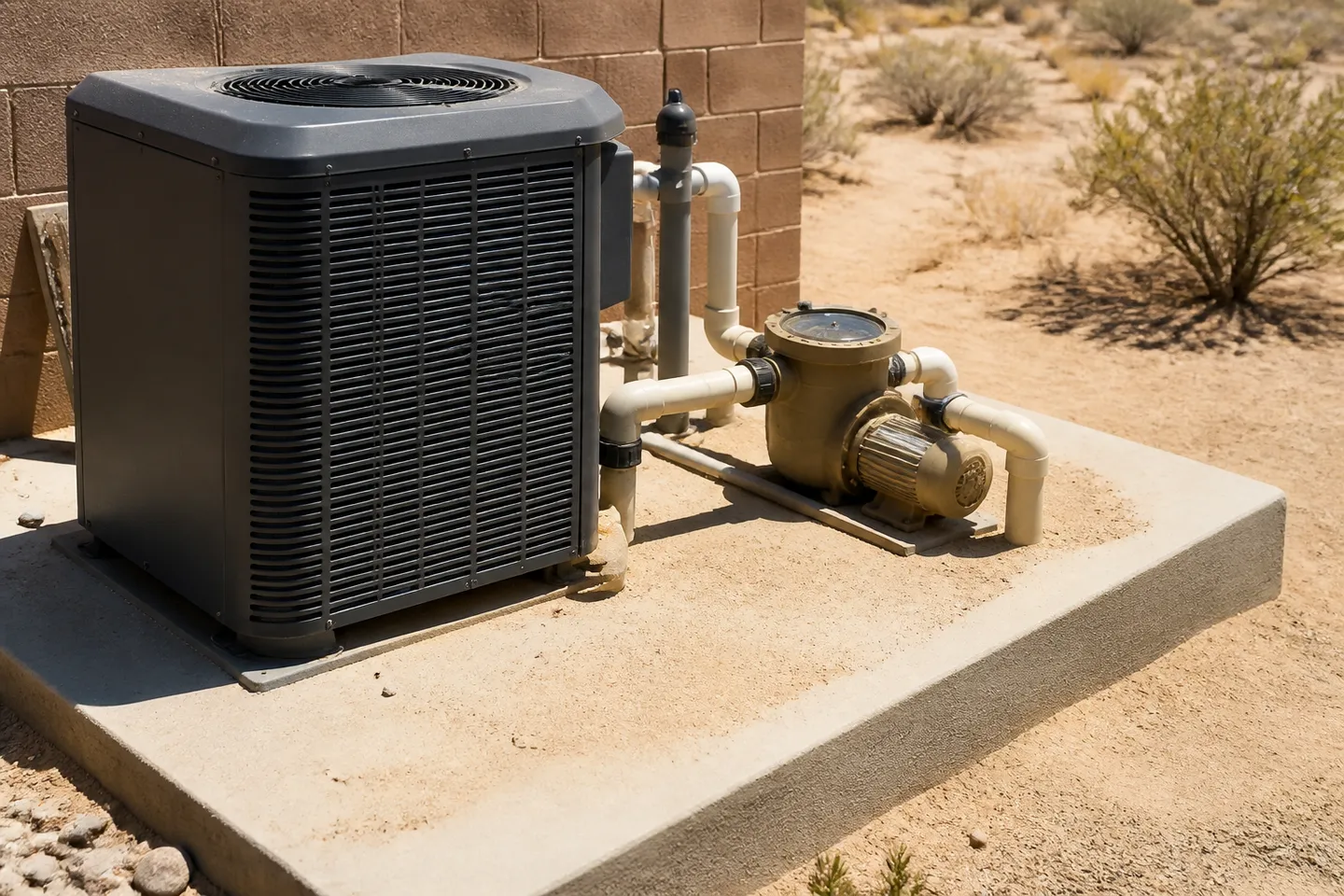
The equipment room is an environmental control problem in this climate: shade the roof, move air, drain the floor, and keep chemicals isolated. Outdoor skid plants need coil clearance, wash-down access and a place for covers to keep grit out of fans.
Hotel and resort plants in the same climates add duty-cycle and uptime rules from the hotel pool planning guide.
Specification checklist
Record ambient design temperature, dust exposure, water analysis, cover decision, filter area, motor enclosure ratings and a spare-parts list on the equipment package checklist. Send that package with the RFQ.
Frequently asked questions
Do hot-climate pools always need a larger pump?
Not automatically. They often need more filtration area, better covers and longer low-speed run hours. A larger single-speed pump can make heat and noise worse if the pipework and filter cannot take the extra flow.
Should outdoor equipment sit in full sun?
Avoid it when the site allows. Direct sun raises enclosure temperatures, shortens capacitor and electronics life, and makes heat-pump coils work harder. Shade, airflow and service access belong on the layout drawing.
Sources
- Swimming Pool Covers — U.S. Department of Energy Accessed August 22, 2026.
- Installing and Operating an Energy-Efficient Swimming Pool Pump — U.S. Department of Energy Accessed August 22, 2026.
- Model Aquatic Health Code — U.S. Centers for Disease Control and Prevention Accessed August 22, 2026.