Direct answer
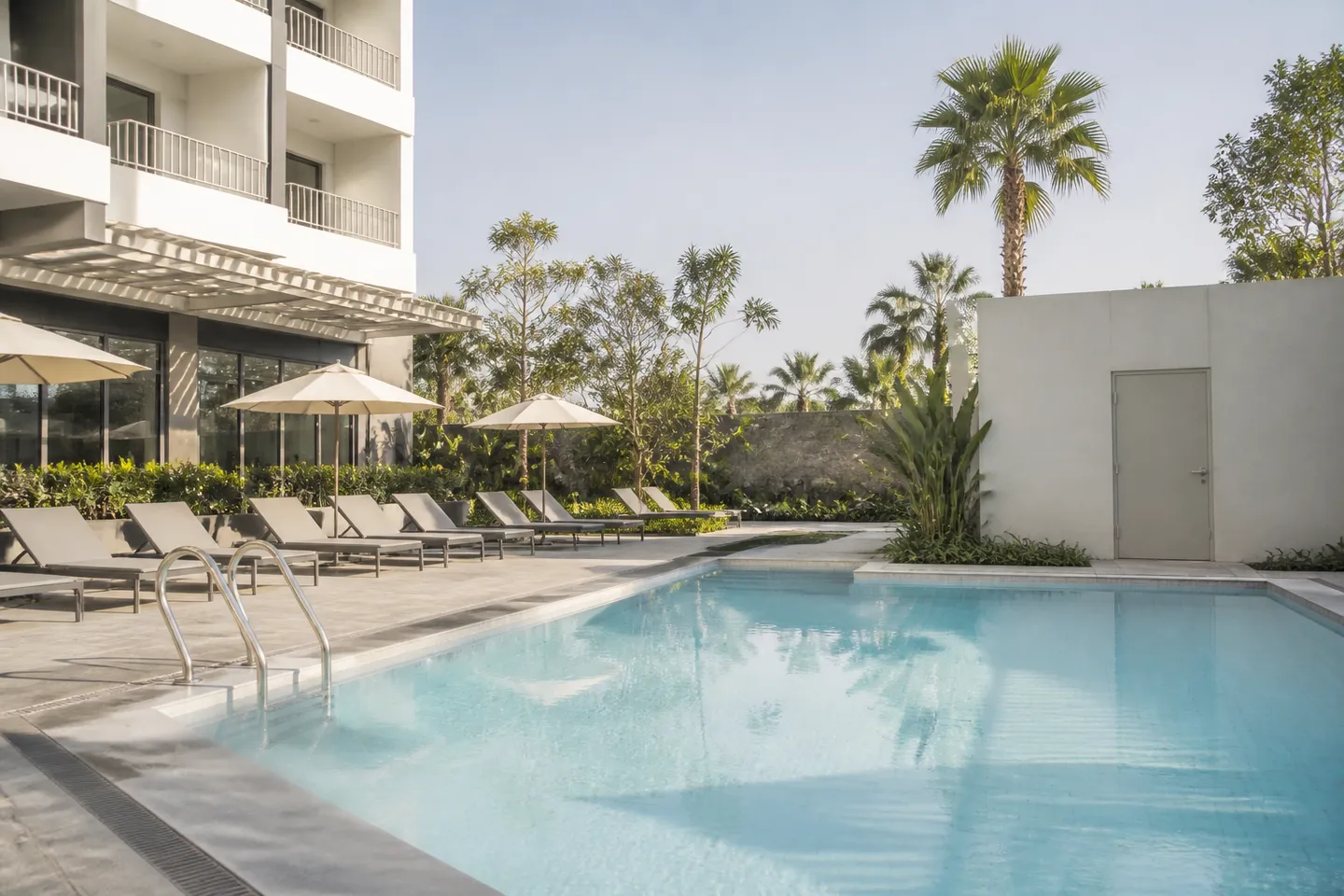
Hotel and resort pools are planned around uptime — code-mandated turnover rates, duty/standby equipment redundancy, monitored water chemistry, maintenance access that does not disturb guests, and complete handover documentation — because a closed pool is a visible service failure that reviews record permanently.
Key takeaways
- Commercial codes mandate faster turnover and continuous treatment; residential sizing habits do not transfer.
- Redundancy on pumps and dosing is cheaper than a single day of pool closure in season.
- Plan maintenance access, deliveries and chemical storage around guest sightlines and hours.
- Handover documentation — schedules, manuals, spares lists — decides whether year two runs as well as day one.
A residential pool that underperforms annoys a family. A hotel pool that closes appears in reviews within hours. That asymmetry drives every planning decision in hospitality pool projects: the system is designed around uptime, not around minimum first cost.
Codes set the floor
Commercial pools fall under public health codes — in the U.S., state codes increasingly aligned with the CDC’s Model Aquatic Health Code — which mandate turnover rates by pool type, continuous disinfection with monitoring, water quality parameters and safety equipment. The first planning step is identifying the governing code, because it sizes the plant before any preference does.
Redundancy is the business case
| System | Redundancy practice |
|---|---|
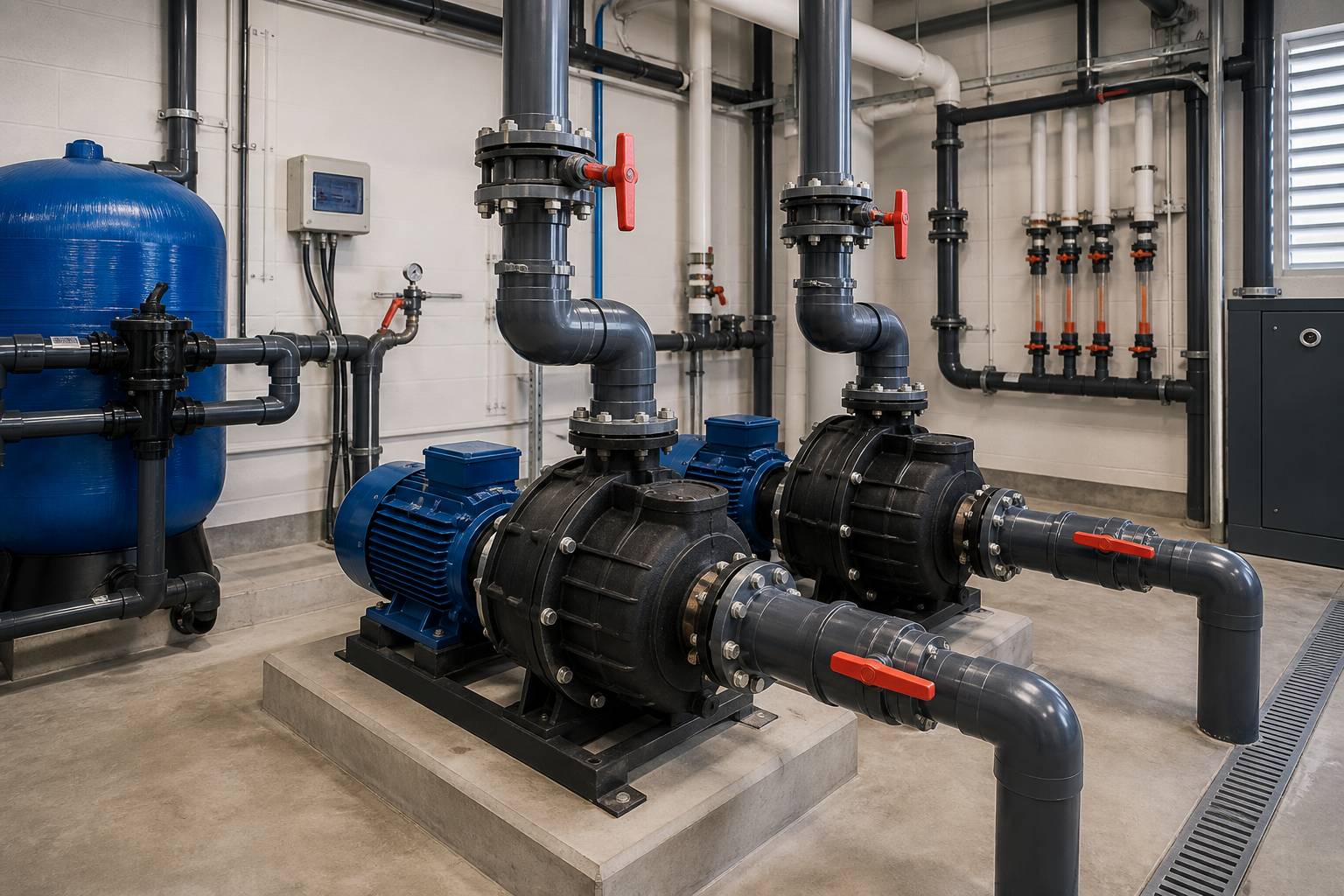
| Pumps | Duty/standby pairs on isolation valves, swappable without draining |
| Filtration | Multiple vessels so one can be serviced in operation |
| Dosing | Backup dosing capability and alarmed chemical monitoring |
| Heating | Staged units rather than one large unit |
| Controls | Alarms that reach staff, manual overrides documented |
Each duplicated component looks like cost until it is compared with a closed pool in season. Plant room space must be planned for this from the start — the sizing and access logic extends the residential guidance in pool equipment room design, and the underlying hydraulics follow the same system overview.
Bather load changes the chemistry
Hotel pools see load residential systems never face: sunscreen films, high organic load, all-day occupancy. That pushes designs toward generous filtration area, supplementary treatment (UV or ozone alongside chlorine) and automated, monitored dosing rather than manual routines.
Operations planned into the architecture
- Maintenance access that avoids guest areas: separate plant access, storage for equipment, delivery routes for chemicals;
- Chemical storage separated, ventilated and lockable, sized for realistic delivery intervals;
- Service windows: night hours for tasks that close the pool, with lighting and safe access to match;
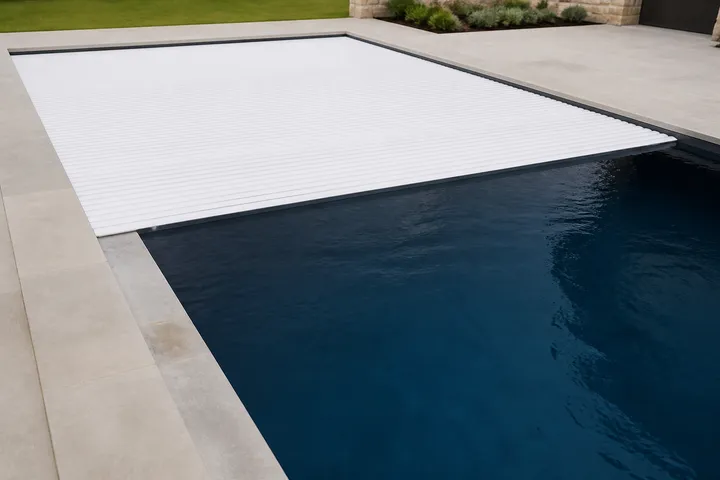
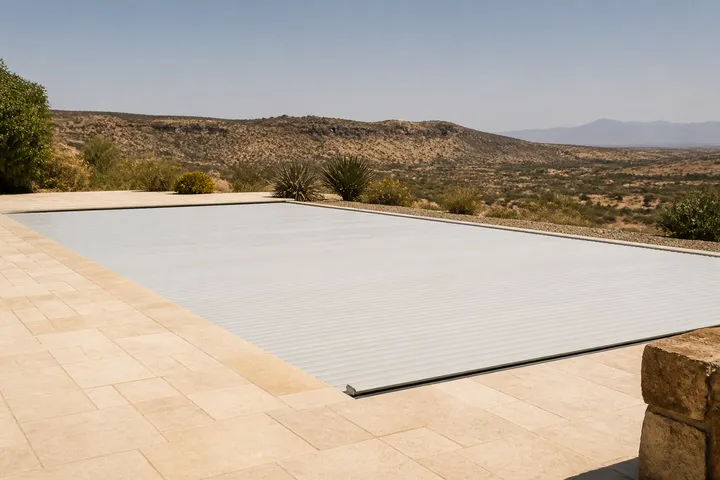
- Covers where closing hours exist — overnight covering cuts evaporation, heat loss and morning cleaning, with the strongest returns in hot regions (covers in hot climates covers the environment-specific specification).
Handover decides year two
Require, as a contract deliverable: the equipment schedule as built, hydraulic and electrical drawings, every manual and data sheet, commissioning records, the maintenance calendar and a recommended spare parts list. Structuring these requirements into supplier quotations from the start is exactly what the pool equipment RFQ guide is for, and the Commercial & Hospitality Pools hub collects the related guides.
Frequently asked questions
What turnover rate does a hotel pool need?
The rate is set by the applicable code and pool type — swimming pools, children's pools and spas each have different requirements, with shallow high-bather-load pools needing the fastest turnover. Confirm the governing code before sizing anything.
Do hotel pools in hot regions need covers?
Outdoor resort pools often stay open and uncovered for guest access, but covers pay back quickly on pools with defined closing hours by cutting overnight evaporation, heat loss and debris — especially in hot, dry climates.
Sources
- Model Aquatic Health Code — U.S. Centers for Disease Control and Prevention Accessed August 22, 2026.
- Pool Safely campaign resources — U.S. Consumer Product Safety Commission Accessed August 22, 2026.