Direct answer
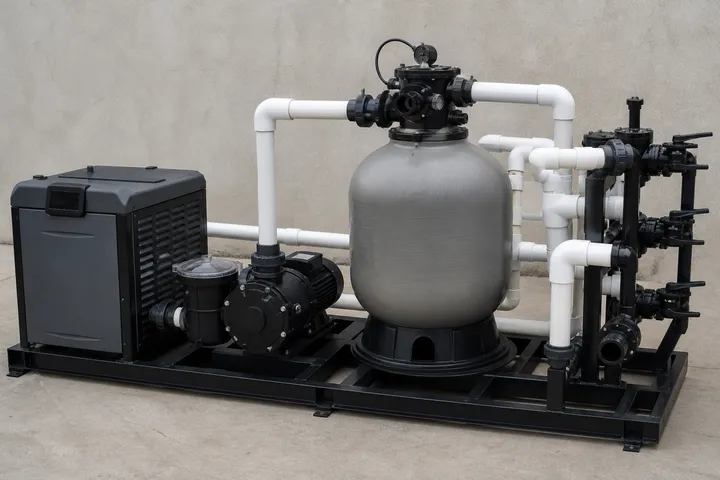
A pool equipment system is one continuous circulation loop — water leaves through skimmers and main drains, is pushed by the pump through the filter, then through heating and sanitization, and returns to the pool, with automation coordinating the stages and the cover reducing the load on all of them. Every component must be sized against the same flow rate and turnover target.
Key takeaways
- Size the system around a turnover target and one design flow rate; components chosen in isolation fight each other.
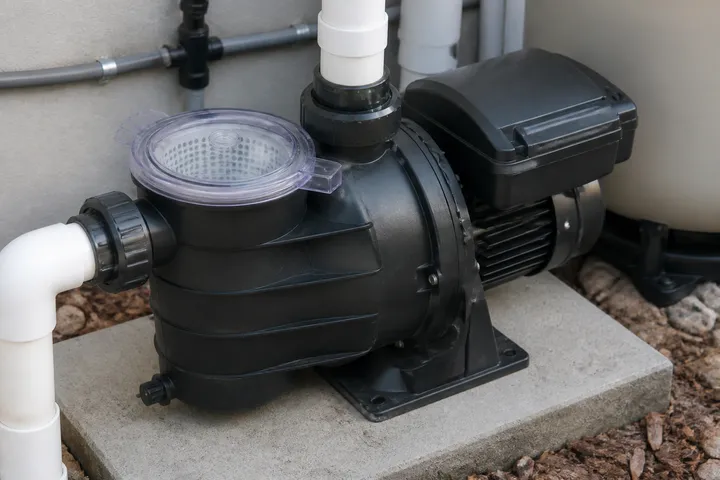
- The pump is the only component that adds energy to the water loop; everything else adds resistance.
- Undersized filters and pipes force pumps to work harder — most equipment problems are hydraulic problems.
- A pool cover reduces heating, chemical and filtration load, which is why it belongs in the equipment conversation.
A swimming pool is a water treatment plant with a nicer view. Understanding it as one loop — rather than a shopping list of products — is the difference between an equipment package that runs quietly for years and one that fights itself.
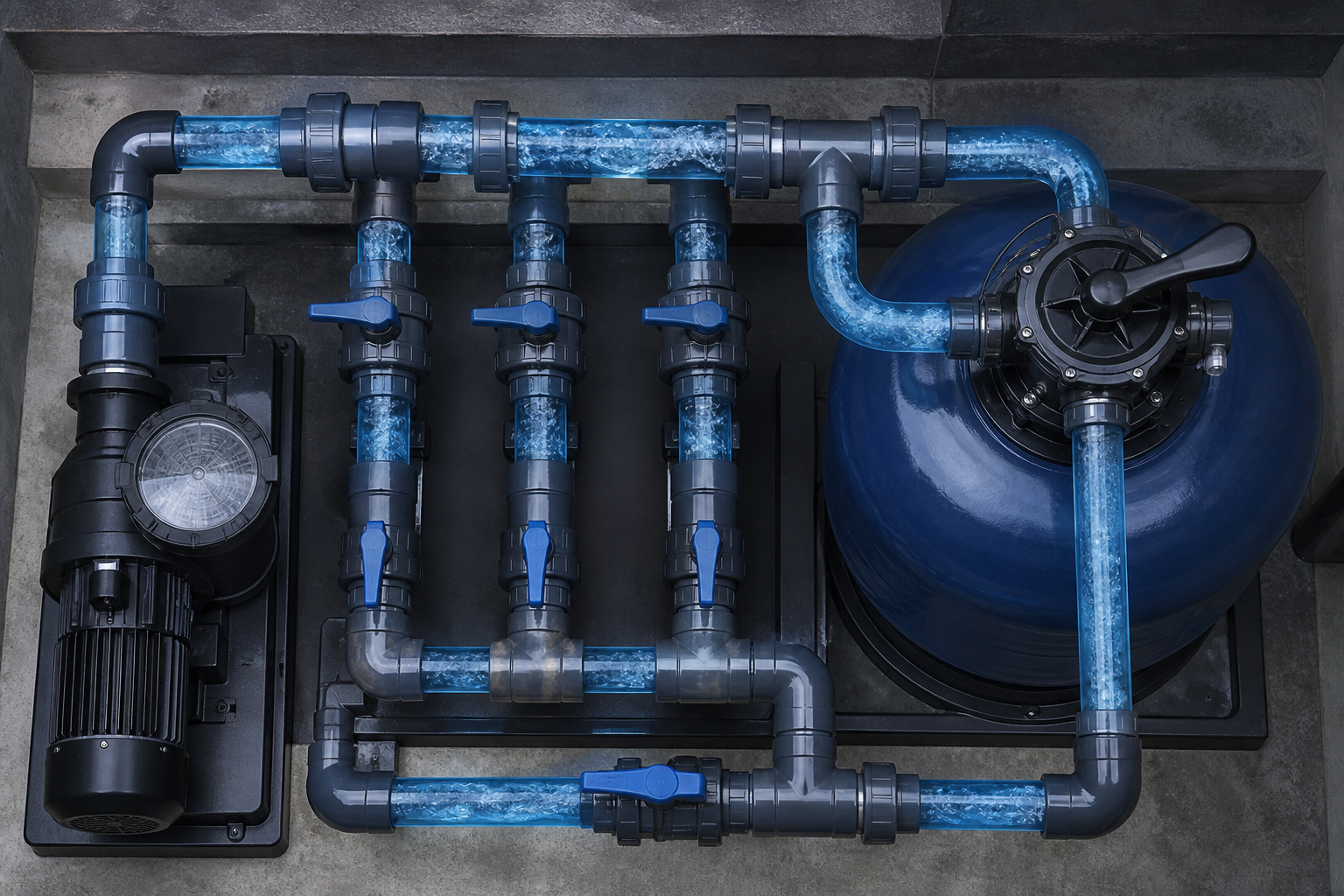
The circulation loop
Pool Shell
   ↓
Skimmers / Main Drains / Returns
   ↓
Pump
   ↓
Filter
   ↓
Heating
   ↓
Sanitization
   ↓
Automation
   ↓
Pool Cover & Safety Systems
Water leaves the pool through skimmers (surface debris) and main drains, travels through suction plumbing to the pump, is pushed through the filter, then through heating and sanitization, and returns through wall or floor returns. Automation schedules and coordinates the stages; a cover cuts the heat, water and debris load on all of them.
One flow rate rules everything
System design starts with a turnover target — how quickly the full pool volume passes through the filter. Dividing pool volume by turnover time gives the design flow rate, and that single number sizes everything:
| Component | Sized by |
|---|---|
| Pump | Design flow at the system’s total head (resistance) |
| Filter | Maximum flux (flow per filter area) at design flow |
| Pipes | Velocity limits at design flow |
| Heater | Volume, desired temperature rise and heat losses |
| Sanitizer | Volume, bather load and climate |
Choose components against different flow assumptions and the mismatch shows up as noise, short filter cycles, poor water clarity or a pump that never reaches its curve. Detailed pump selection is covered in the pool pump sizing guide, and filter choice is covered in pool filter types compared.
The pump adds energy; everything else takes it away
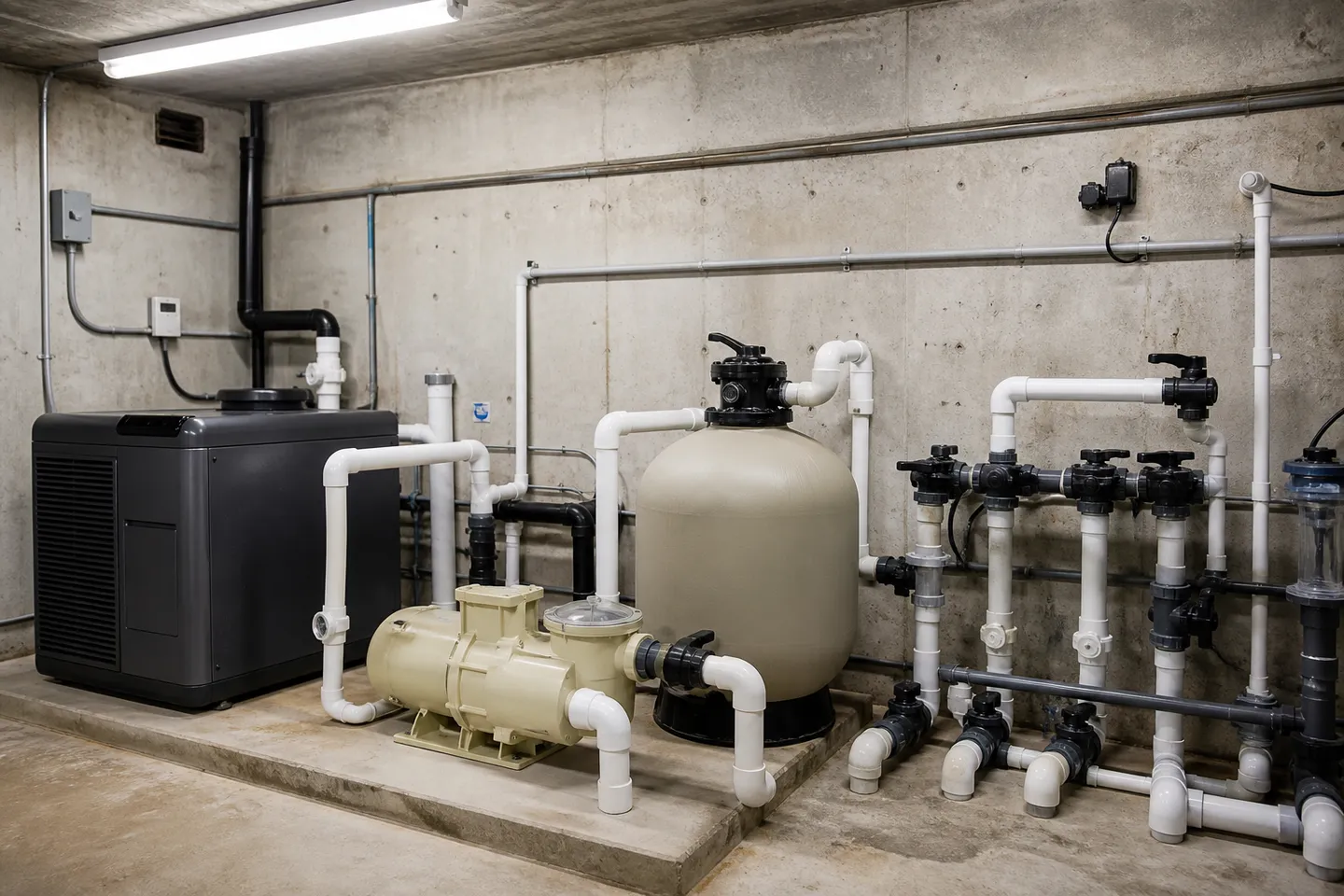
Every meter of pipe, every elbow, the filter bed and the heater core all add hydraulic resistance. A generously piped system with an efficient variable-speed pump can move the same water with a fraction of the electricity — the U.S. Department of Energy’s pump guidance shows large savings from running bigger plumbing at lower speeds for longer hours. This is why the equipment room and plumbing layout deserve design attention before any product is chosen; see pool equipment room design.
Where the cover fits
A covered pool loses dramatically less heat and water, admits less debris and consumes less sanitizer. Practically, that shrinks the heater, extends filter cycles and stabilizes chemistry — which is why the automatic pool cover belongs in the equipment schedule, not in a separate conversation.
Commercial differences
Commercial and hospitality pools follow stricter codes (faster turnover, redundancy, monitored chemistry — see the CDC’s Model Aquatic Health Code for the U.S. framework) and are planned around downtime avoidance. The commercial planning context is in the hotel and resort pool planning guide.
From overview to procurement
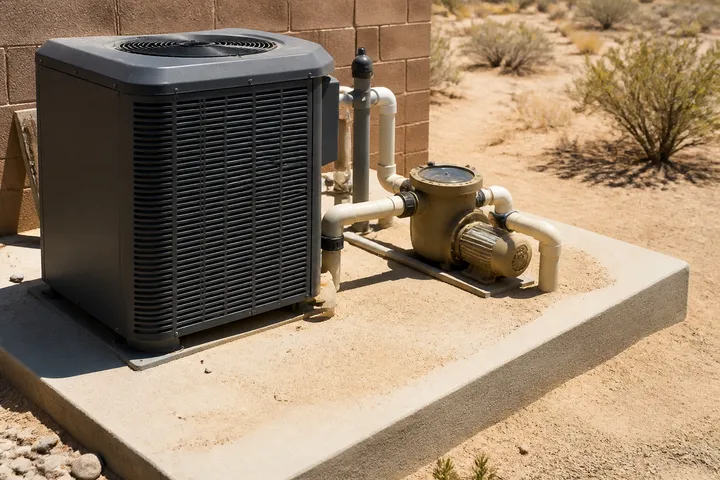
When the loop is understood, the procurement package almost writes itself: one hydraulic schematic, one equipment schedule with shared flow assumptions, and data sheets for each stage. Record the loop on the equipment package checklist before you issue an RFQ. Hot, dusty sites need the extra detailing in pool equipment for hot climates. The Pool Equipment & Automation hub collects the component-level guides.
Frequently asked questions
What is pool turnover and why does it drive sizing?
Turnover is the time needed to circulate the pool's full volume through the filter once. Residential pools commonly target one turnover in roughly 8 to 12 hours; commercial codes require faster rates. The target sets the design flow, which sizes the pump, filter and pipes.
In what order does water pass through the equipment?
Suction lines from skimmers and main drains feed the pump, water then passes through the filter, then the heater, then sanitization, and finally returns to the pool. Sanitizer injection is last so treated water does not sit in the heater.
Sources
- Installing and Operating an Energy-Efficient Swimming Pool Pump — U.S. Department of Energy Accessed August 22, 2026.
- Model Aquatic Health Code — U.S. Centers for Disease Control and Prevention Accessed August 22, 2026.