Direct answer
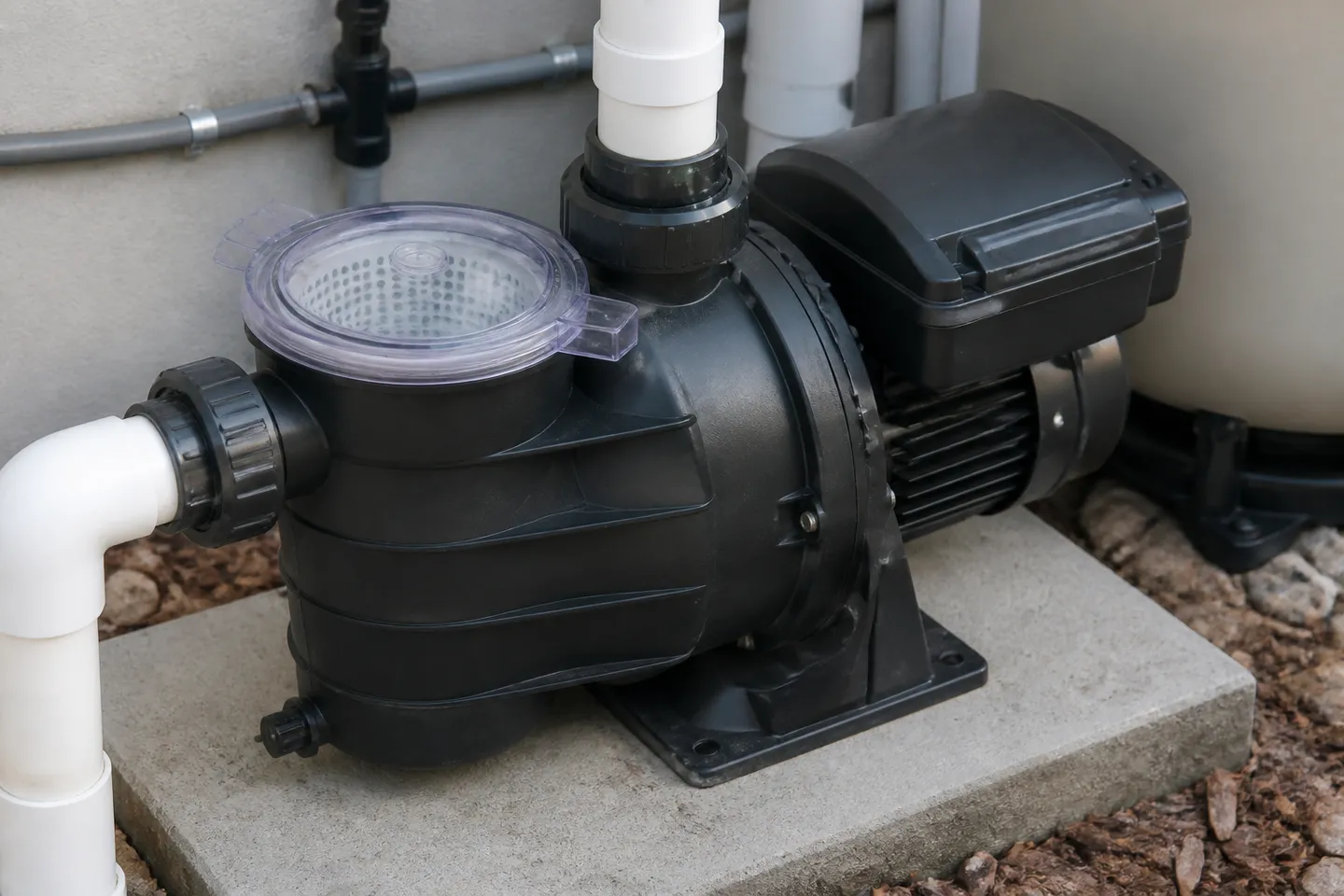
Size a pool pump by calculating the design flow rate from pool volume and turnover target, estimating the system's total dynamic head, and selecting a pump whose curve delivers that flow at that head — then prefer a variable-speed model run slower for longer, because an oversized single-speed pump wastes energy and stresses the filter.
Key takeaways
- Design flow = pool volume ÷ turnover time; that number, not habit, sizes the pump.
- Total dynamic head — pipe, fittings, filter and heater resistance — decides where the pump actually operates on its curve.
- Oversizing is the most common sizing error and costs energy every hour the pump runs.
- Variable-speed pumps running longer at low speed deliver the same turnover for a fraction of the electricity.
Pump sizing has a folk tradition — “get the biggest one that fits the budget” — and a correct method. The correct method is three numbers long.
Step 1: Design flow rate
Divide pool volume by the turnover target.
- 60 m³ pool, 10-hour turnover → 6 m³/h design flow.
- In U.S. units: 15,000 gallons over 10 hours → 25 gpm.
Turnover targets: roughly 8–12 hours for residential pools; faster, code-mandated rates for commercial pools. Volume comes from the pool drawings or a measured calculation.
Step 2: Total dynamic head
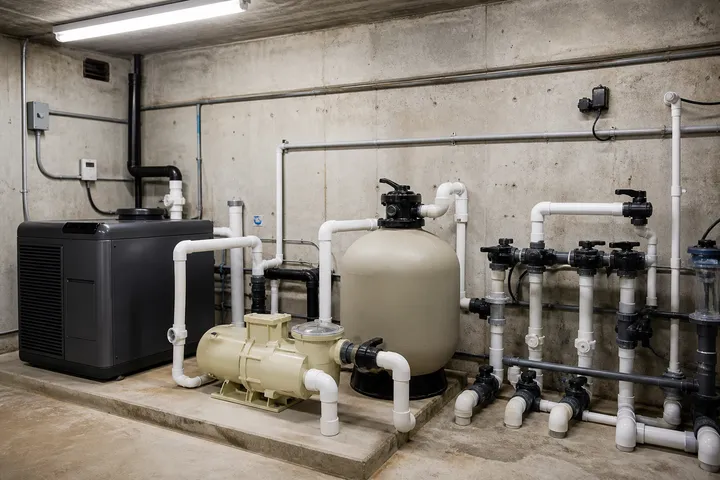
Head is the resistance the pump must overcome: pipe friction, elbows and fittings, the filter, the heater and any water features. Long, undersized suction lines are the usual offender. On new projects, head can be estimated from the plumbing layout; generous pipe diameters planned in the equipment room design stage buy quieter, cheaper operation for the system’s whole life.
Step 3: Read the pump curve
Manufacturers publish curves of flow against head. Select the pump whose curve passes through your design point — design flow at estimated head — near its efficient region. A pump chosen without the head estimate will operate somewhere else on its curve than the catalog number that sold it.
Why oversizing fails
| Consequence | Mechanism |
|---|---|
| Higher energy cost | Pump power rises steeply with flow; excess flow is pure waste |
| Worse filtration | Flow above the filter’s design flux reduces capture efficiency |
| Noise and wear | Higher velocities in pipes and fittings |
| Short cycling | Automation compensates by running less, hurting turnover distribution |
The variable-speed exception
Variable-speed pumps break the old trade-off. Because pump power falls roughly with the cube of speed, running twice as long at half speed moves the same water for a fraction of the energy — the U.S. Department of Energy’s guidance documents typical savings well over half. Sizing logic stays identical: the pump must still reach the design point when needed (spa jets, cleaning), but daily filtration runs at the lowest speed that achieves turnover.
Commercial note
Commercial pools size pumps to code-mandated turnover with redundancy (duty/standby pairs) and must hold flow as filters load. That planning context is part of the hotel and resort pool planning guide.
Putting it in the package
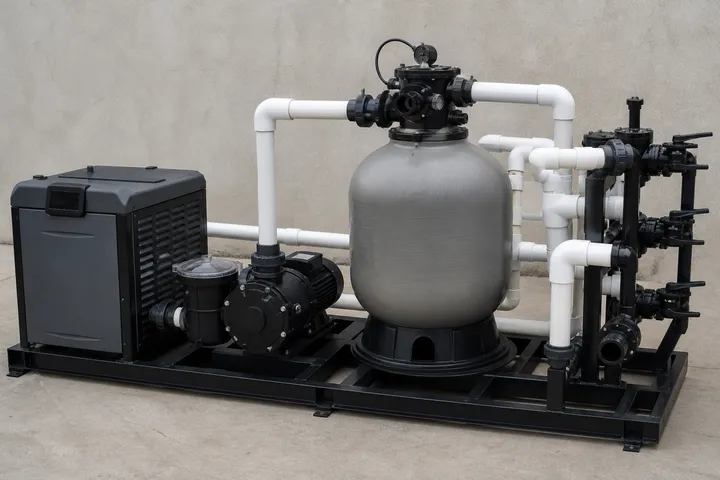
Record the design flow, head estimate and selected operating point in the equipment schedule so the filter and pipe sizing stay consistent — the system-level picture is in the pool equipment system overview, and quotation-ready documentation is covered in the pool equipment RFQ guide.
Frequently asked questions
What turnover time should a residential pool target?
A common residential target is one full turnover in roughly 8 to 12 hours. Commercial pools follow code-mandated, typically faster turnover rates that depend on pool type and jurisdiction.
Why does an oversized pump hurt the filter?
Excess flow pushes water through the filter bed faster than its design flux, reducing capture efficiency and, in sand filters, risking channeling — so clarity gets worse while the electricity bill gets bigger.
Sources
- Installing and Operating an Energy-Efficient Swimming Pool Pump — U.S. Department of Energy Accessed August 22, 2026.