Direct answer
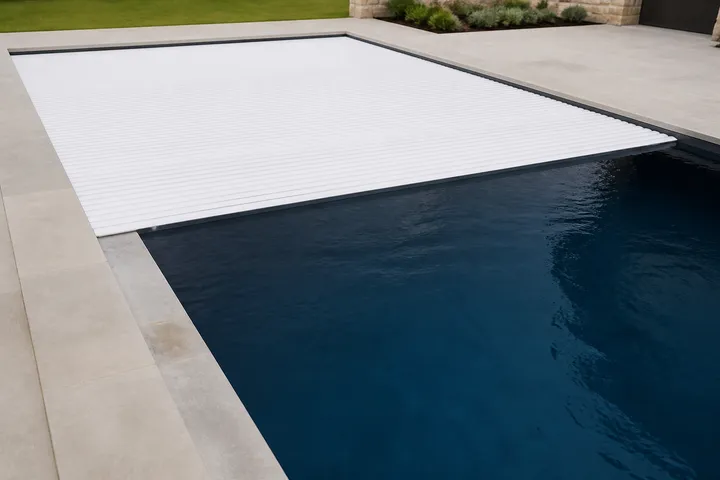
On a new pool, the cover housing, track channels, conduits and pit drainage are formed into the structure, enabling recessed, nearly invisible systems. On an existing pool, the practical route is toptrack or deck-mounted tracks with a bench or above-deck roller — faster to install but visually different, and dependent on the pool being close to rectangular.
Key takeaways
- Decide on a cover before structural drawings are finalized; recessed options disappear once concrete is poured.
- Retrofits hinge on three checks — parallel walls, deck space for tracks and roller, and available power or hydraulic routing.
- Pit and housing drainage is the most common weak point in both scenarios; design it, don't improvise it.
- Retrofit covers on freeform pools are possible but need custom track layouts and honest expectation-setting.
The same automatic cover system produces two very different projects depending on when it enters the plan. Designed into a new pool, it disappears into the structure. Added later, it sits on top of it. Both work; they differ in cost, appearance and the amount of construction they touch.
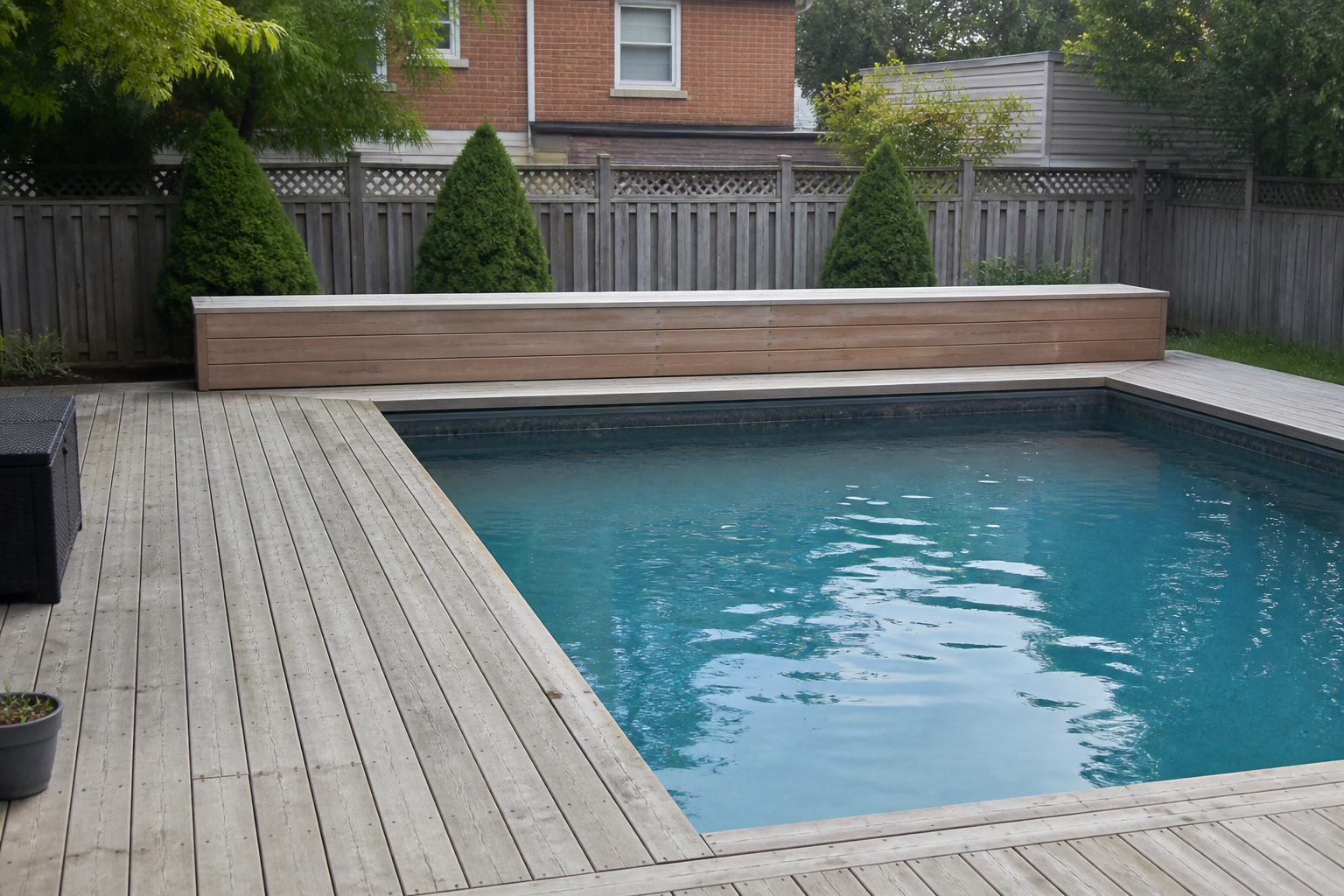
New build: what preplanning buys
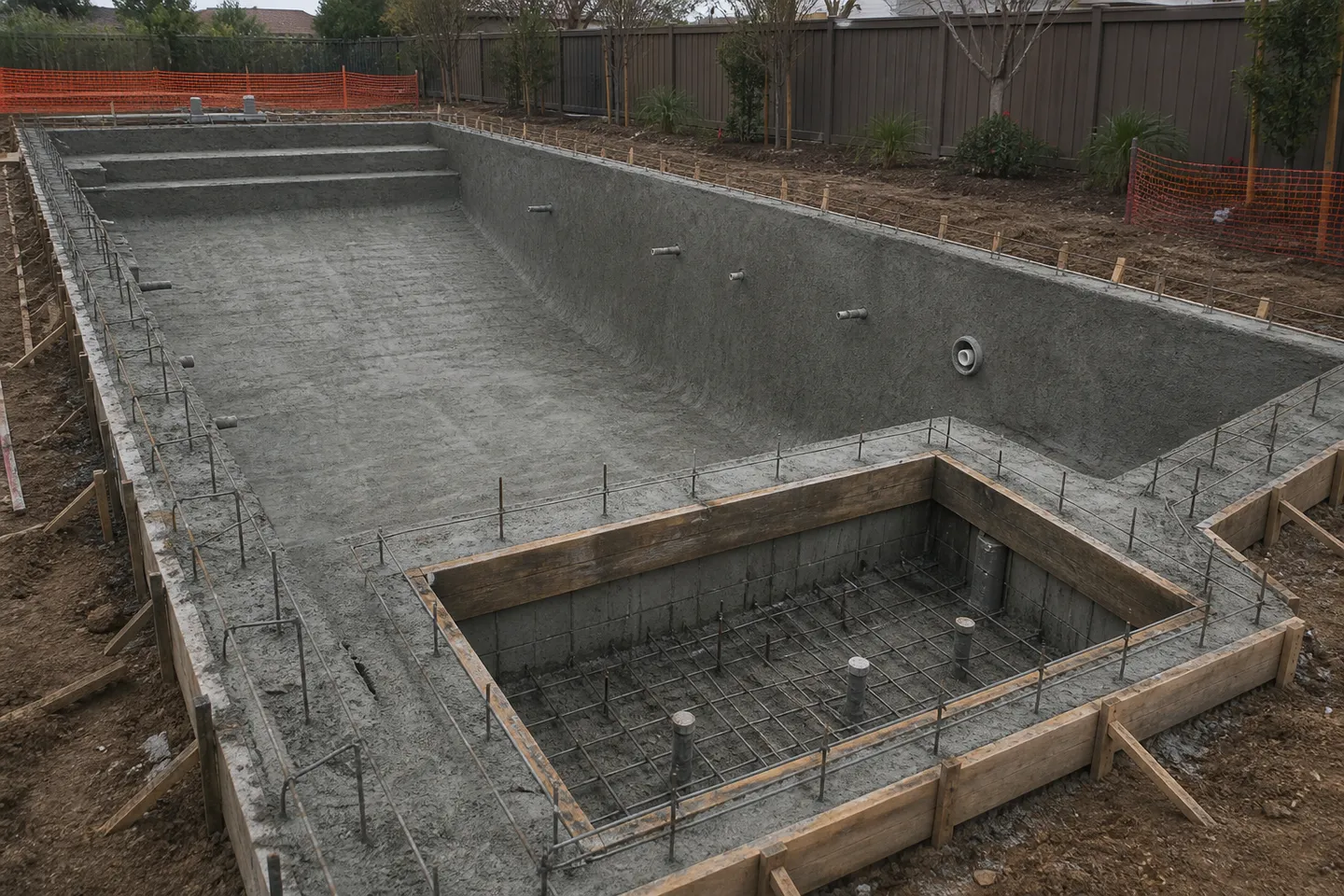
When the cover is on the drawings before the shell is built, the project can include:
- A recessed housing pit at the end wall, with a walkable lid flush to the deck;
- Undertrack channels formed into the walls (see undertrack vs toptrack);
- Conduits for power or hydraulic lines run before the deck is poured;
- Pit drainage connected to the site drainage design rather than left to a sump;
- Coping and deck details that conceal hardware.
Each of these is inexpensive as formed concrete and conduit, and disruptive as demolition. The coordination items belong on the new pool planning checklist alongside the equipment room and plumbing layout.
Retrofit: what the existing pool dictates
A retrofit starts from three feasibility checks:
- Geometry. Are the walls close to parallel along the cover’s travel? Deck-mounted tracks tolerate modest deviation; strong freeform shapes need custom layouts.
- Deck space. Is there room for tracks on the deck and a bench or above-deck housing at one end? The housing needs service access, not just clearance.
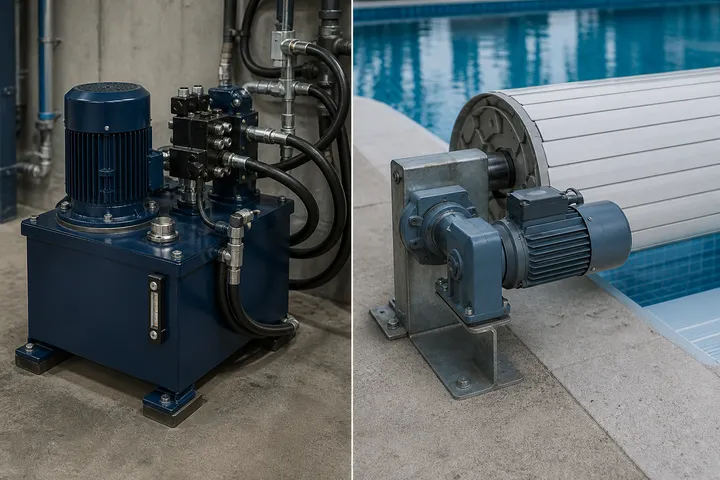
- Services. Can power (or hydraulic lines from a remote unit) reach the roller location without trenching the entire deck? Drive selection interacts with this — see hydraulic vs electric drives.
If all three pass, a retrofit typically installs in days. If the deck must be cut for a partially recessed housing or new conduits, the project grows into small-scale construction and belongs inside a broader scope — coordinate it with the guidance in pool renovation planning.
Cost and appearance expectations
| Aspect | New build (recessed) | Retrofit (surface) |
|---|---|---|
| Visible hardware | Minimal | Tracks and housing visible |
| Construction impact | Absorbed into build | Days of installation; possible deck cutting |
| Relative system cost | Higher (housing, undertrack) | Lower hardware, but variable site work |
| Shape flexibility | Designed around | Constrained by existing geometry |
Drainage: the shared weak point
In both scenarios the housing and pit must drain reliably. A roller sitting in standing water shortens motor and fabric life regardless of drive type, and it is the defect most often discovered a season after handover. Specify where pit water goes, at what rate, and who verifies it at commissioning.
Measure before you ask for prices
Suppliers can only quote as accurately as the dimensions they receive. Record lengths, widths, diagonals, coping details, obstacles and service locations on the automatic pool cover measurement sheet, and read the complete automatic pool cover guide for the full system context before comparing offers.
Frequently asked questions
How much notice does a builder need to preplan a cover on a new pool?
The cover must be on the structural, hydraulic and electrical drawings before shell construction starts, so involve the cover supplier during design development, not after excavation.
Will a retrofit cover fit a pool that is not perfectly rectangular?
Small deviations are handled by setting deck tracks parallel even when walls are not. Strongly freeform shapes need custom layouts and wider covered margins, which raise cost and change the appearance.
Sources
- ASTM F1346 Standard Performance Specification for Safety Covers — ASTM International Accessed August 22, 2026.
- Swimming Pool Covers — U.S. Department of Energy Accessed August 22, 2026.